|
| | |
 |
| | |
 |
Come once again and explore along the beach with camera in hand. For this stroll, we continue to search for more creatures brought forth by the tide. From beneath the waves we are searching for animals like mussels, barnacles, crabs and others that thrive in this fascinating zone of nature. |
| S |
 |
|
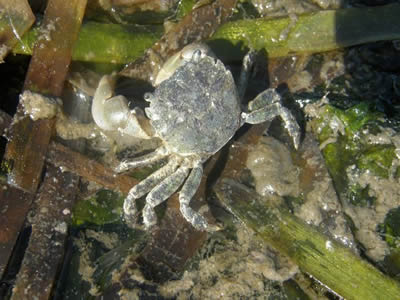 |
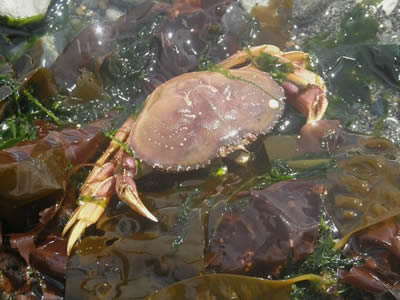
A crab will shed its shell many times in the course of its life time and so discarded shells may find their way onto the beaches such as these two. The Dungeness Crab, Cancer magister, (left) likes sandy, offshore water where it lurks in the seaweeds. The Purple Shore Crab, Hemigrapsus nudus, (right) generally spends its days hiding under rocks but will venture onto sandy beaches to scavenge during the night, hence its common name. |
| | |
|
|
 |
|
 |
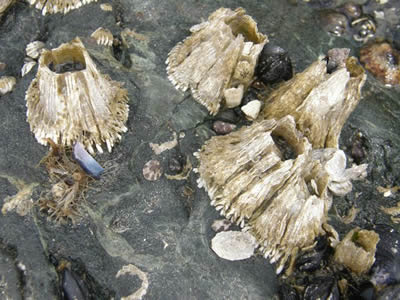
Barnacles are very interesting animals. They are crustaceans, therefore related to shrimps and crabs, however spend their lives attached to rocks and other surfaces including ships, becoming a nuisance for sailors. The Giant Acorn Barnacle, Balanus nubilus, is shown here safely adhered to the rocks. When water washes over the barnacles, they reach out a structure called a cirri which tries to grasp bits of food particles in the water. |
| | |
|
|
 |
The Striped Barnacle, Balanus glandula, also known as the Acorn Barnacle is very easily recognized with its well-defined striped ridge and corrugated appearance. |
| |SD |
 |
|
 |
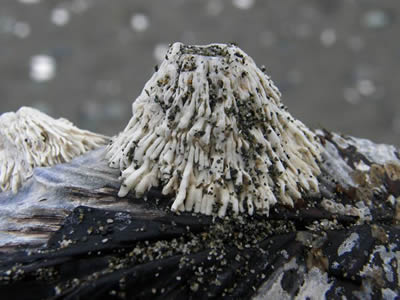
Thatched Barnacles, Semibalanus cariosus, resemble thatched roofs of old English cottages. |
| || |
|
|
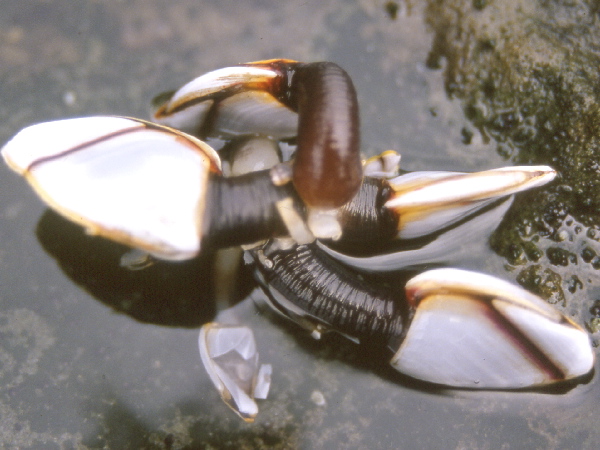 |
The Gooseneck Barnacle, Lepas anatifera, is a little different from the most other barnacles. After a storm these strange animals can be found attached to anything that floats in the sea including from wood and even plastic. |
| S |
|
The Leaf Barnacle, Pollicipes polymerus, can be found among thick beds of California Mussels. These crustaceans thrive in the pounding surf. |
| |
|
Leaf Barnacles compete with mussels for food and space. |
S |
 |
|
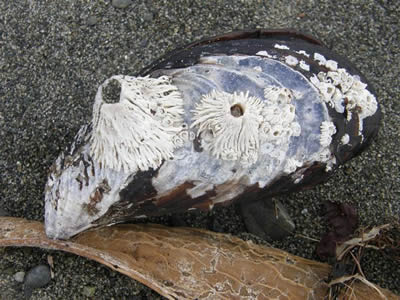 |
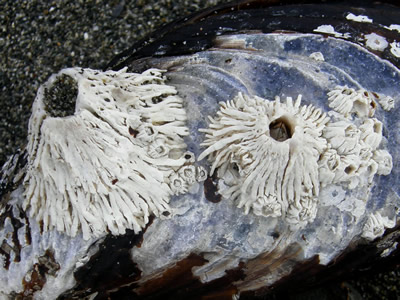
Some barnacles end up attaching themselves on the hard shells of other sea creatures. A Giant Acorn Barnacle (left) is attached attached to a California Mussel. A large Thatched Barnacle (right) and a number of smaller ones have also made a home on a mussel. |
| || |
|
|
|
The Bivalves make up one of the most common groups of animals found on the beach and in tidal pools. These creatures all have two shells which are hinged together, like this Dark Mahogany Clam, Nuttallia obscurata. Included in this group are scallops, clams, cockles (small clams), oysters and mussels. They feed by siphoning and filtering food particles from the water. |
| | |
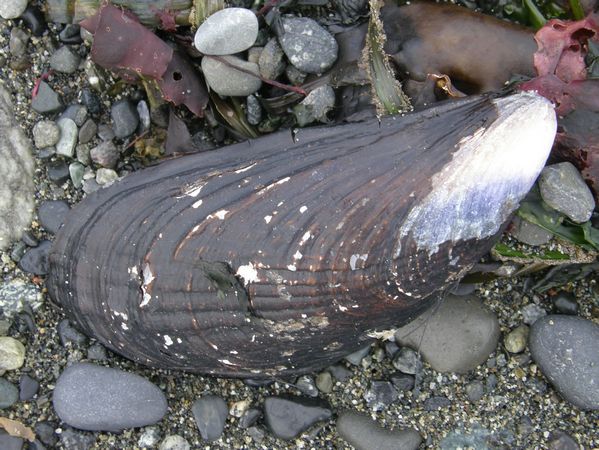 |
California Mussels, Mytilus californiensis, are huge, reaching up to 8 inches/20 cm across. They grow together in massive communities, generally attached to rocks, the shore and man-made structures where they survive all sorts of pounding tides. These colonies provide shelter for many other animals. |
| |
 |
As the colony gets older, mussels may grow on top each other, weakening the bottom layer attached to the rock. When this breaks free, the rock is once again exposed and another colony can begin. |
| |
|
|
| |
| Dereila Nature Inn Home > Lagoon Trail > Marine Life Guides, Articles, Trivia and More! > Life Beneath the Waves |
| |
|
|
|